
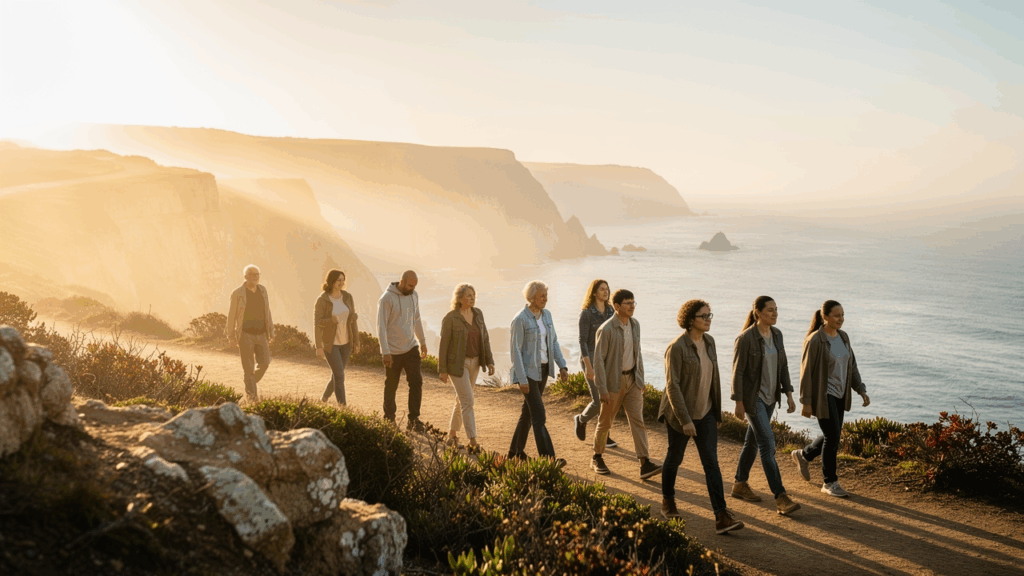
The therapeutic impact of community trips for bereaved widows, widowers, and adult orphans lies in their capacity to function as a structured intervention that combines peer connection, respite, and psychological containment within a single experience. Rather than replicating ordinary travel, these programs are designed to interrupt the isolation that grief typically produces, restore a participant's sense of autonomy, and create conditions for shared emotional processing among people who understand loss from lived experience. This article examines the theoretical mechanisms behind grief-focused travel, the participant screening protocols required for safe implementation, the structural design of such programs, and the post-trip integration models that determine whether the benefits of the journey persist after return.
What Makes Travel Therapeutic After Loss?
Grief researchers describe coping through the Dual Process Model, which frames adaptation to loss as an oscillation between loss-oriented coping, the direct confrontation of grief, and restoration-oriented coping, the engagement with daily tasks and future-building. Structured travel operationalizes this model in practice: shared meals and quiet moments allow loss-oriented coping to surface naturally, while unfamiliar landscapes and physical movement create restoration-oriented coping without forcing avoidance. This alternation, rather than the pursuit of one state over the other, produces respite and recovery for participants who might otherwise remain fixed in constant mourning or exhausting distraction.
A dedicated peer support group also changes the social dynamics surrounding bereavement. Outside such a setting, widowed and orphaned adults often find that friends grow uncomfortable with prolonged sadness, producing quiet withdrawal from ordinary circles. Within a group composed entirely of people who share the experience of loss, mutual validation becomes routine, supporting meaning-making around the loss itself and contributing to measurable post-loss adjustment as participants test new ways of relating to others.
Screening Standards for Grief Travel Candidates
Not every bereaved individual is an appropriate candidate for community trips for bereaved widows widowers and adult orphans, and responsible program design begins with an assessment of readiness rather than open enrollment. Suitable candidates typically show baseline emotional stability, meaning they can discuss their loss without becoming acutely dysregulated, along with voluntary interest in joining rather than pressure from relatives. Capacity for social engagement within a shared environment, such as tolerating communal meals and unfamiliar surroundings, is also required, since a trip cannot substitute for therapy when a participant cannot yet function outside a controlled setting.
Screening Out Acute Distress, Complicated Grief, and Contraindications
Certain conditions indicate that peer travel is inappropriate until further clinical work has occurred. Active substance dependence, severe untreated psychiatric crises, and traumatic bereavement involving sudden or violent circumstances typically require oversight that a travel program cannot provide. Complicated grief, marked by persistent and disabling symptoms well beyond typical mourning timelines, falls into this category as well. The World Health Organization has published diagnostic standards for prolonged grief disorder that describe how it differs from ordinary bereavement, offering screening teams a reference point. The American Psychiatric Association similarly outlines a clinical understanding of prolonged grief disorder that coordinators can use to decide whether an applicant needs dedicated psychotherapy before group travel.
Common Mistakes in Facilitating Grief-Focused Group Trips
Establishing Psychological Safety and Group Norms
A frequent mistake is treating facilitation as an afterthought. Grief-informed facilitation requires a fixed facilitator-to-participant ratio, written confidentiality agreements, and consent obtained before any activity involving emotional disclosure. These details create psychological safety, the sense that vulnerability will not be exposed outside the group. Established principles of group cohesion and safety apply directly here: cohesion develops when members sense clear boundaries, and containment is maintained when facilitators intervene early rather than allowing distress to escalate.
A second common error is scheduling every activity as mandatory. Trigger management requires designated quiet zones away from group activity, access to an on-call support contact, and a clear exit option for participants who become overwhelmed during an excursion. All group activities, sharing circles, and excursions must remain strictly voluntary, since removing the option to opt out undermines the personal autonomy the trip is meant to restore.
Distinct Bereavement Trajectories: Spousal Loss Versus Parental Bereavement
Addressing the Needs of Widows and Widowers
Spousal bereavement disrupts daily routines, shared domestic arrangements, and joint plans for the future in ways that parental loss does not typically replicate. A surviving spouse often faces decisions that were previously shared, and this shift demands identity reconstruction alongside grief itself. Group trips offer a setting for social reconnection, allowing widows and widowers to test new roles and rediscover independence among others who understand the guilt that sometimes accompanies a moment of enjoyment away from the loss.
Addressing the Developmental Realities of Adult Orphans
Adult orphans face a different landscape, often described as the loss of ancestral anchoring, the sense of becoming the oldest living generation within a family line. This shift changes generational identity even when the loss was anticipated. Maintaining continuing bonds, an ongoing internal relationship with a deceased parent through memory or ritual, plays a distinct role in adjustment. Subgrouping or tailored thematic sessions allow adult orphans to address these milestones without their experience being treated as secondary to spousal loss.
Program Architecture: Daily Pacing and Ritualized Activities
A typical day balances light physical activity, unstructured time, and optional group moments rather than a packed itinerary. Sensory overload is avoided through moderate travel distances, accessible transit, and schedules that can be adjusted without disrupting the group.
| Time of Day | Activity Type | Therapeutic Purpose |
|---|---|---|
| Morning | Light nature walk (1-3 km) or coastal visit | Restoration-oriented engagement |
| Midday | Shared meal, unstructured rest | Respite and recovery |
| Afternoon | Guided reflection session (voluntary) | Loss-oriented processing |
| Evening | Optional memorial ritual or free time | Symbolic closure without pressure |
Guided reflection sessions are typically offered once daily and remain optional, giving participants space to discuss memories under the direction of a trained facilitator. A voluntary memorial ritual, such as candle lighting or reflective writing, may close the trip while respecting diverse cultural, secular, and religious backgrounds; no participant is required to attend.
Returning Home: Preventing Re-Entry Distress After a Grief Journey
Post-trip decompression is a recognized risk in short-term grief interventions: returning to an empty home or an unchanged routine can trigger an acute resurgence of loneliness that overshadows the benefits gained during the journey. Facilitators and participants are encouraged to prepare a structured aftercare plan before departure rather than after return, establishing predictable check-in points and realistic expectations for the adjustment that follows re-entry.

Sustained peer networks extend the value of the trip well beyond its final day. Digital communication channels, scheduled virtual reunions, and local meetups among participants who live near one another reinforce the bonds formed during travel. When this contact continues regularly, a temporary travel experience becomes part of a longer process of post-loss stabilization, giving participants ongoing access to people who remain available long after the group has returned home.
Who should avoid group grief travel programs?
Individuals with active substance dependence, an untreated psychiatric crisis, or symptoms consistent with complicated grief typically require clinical care before joining a peer travel program.
How long do grief-focused community trips usually last?
Programs of this kind are generally short, structured journeys lasting several days, long enough to allow shared processing without overwhelming participants with prolonged commitment.
Are family members permitted to join these trips?
Most programs are limited to bereaved participants themselves, since the peer dynamic depends on shared lived experience rather than mixed family attendance.
What happens if a participant becomes distressed during an activity?
Structured programs maintain designated quiet zones, on-call psychological support, and a clear exit option so a distressed participant can withdraw from any activity without pressure.
About the Business
The organization operates as a nonprofit dedicated to supporting the distinct needs of widows, widowers, and orphaned children and adults connected to Israel's military and security forces. Its work spans educational assistance, emotional guidance, and community programs addressing the practical and psychological consequences of loss. Among its offerings, the organization provides bereavement support alongside financial and social assistance intended to help affected families rebuild stability after the death of a loved one in service.